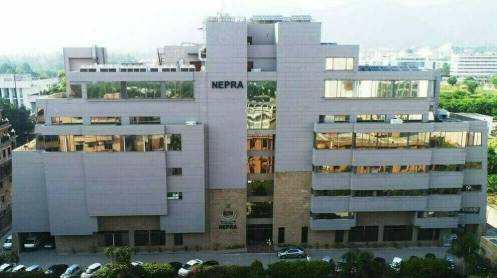
**ISLAMABAD:** A member of the National Electric Power Regulatory Authority (Nepra) has raised concerns over accounting and regulatory inconsistencies in the regulator’s approval of the National Grid Company’s (NGC) Rs332 billion revenue requirement, warning that the methodology understates the company’s equity and allowable return.
In a detailed dissenting note to Nepra’s recent 2-1 majority decision, Member (Tariff & Finance) Amina Ahmed questioned the treatment of more than Rs19 billion payable to the Central Power Purchasing Agency (CPPA), describing it as a “mirror image” liability linked to corresponding receivables that were not properly accounted for.
The regulator recently approved a three-year revenue requirement of **Rs332 billion** for NGC—formerly the National Transmission & Despatch Company (NTDC)—covering FY2022-23, FY2023-24 and FY2024-25. The approved amount will be recovered from electricity consumers through the Use of System Charges (UoSC).
NGC had originally sought **Rs478 billion** under the multi-year tariff framework, including **Rs112 billion** for FY2022-23, **Rs163 billion** for FY2023-24 and **Rs203 billion** for FY2024-25.
However, Nepra approved **Rs81.5 billion** for FY2022-23, **Rs95.6 billion** for FY2023-24 and **Rs155 billion** for FY2024-25. Consequently, the regulator set UoSC at **Rs382 per kilowatt per month** for FY2022-23, **Rs455 per kW per month** for FY2023-24 and **Rs710 per kW per month** for FY2024-25.
In her dissent, Ms Ahmed argued that the majority decision incorrectly treated the **Rs19 billion payable to CPPA** as a loan and deducted it from NGC’s equity, thereby reducing the permissible return allowed to the company.
She explained that under the **Business Transfer Agreement (BTA)** signed in June 2015, NGC transferred market operations-related assets and liabilities to CPPA. Since the liabilities transferred exceeded the value of assets, a net payable remained on NGC’s books, which had grown to more than **Rs19 billion** by June 30, 2024.
At the same time, she noted, NGC recorded a corresponding receivable under current assets representing amounts recoverable from power sector entities. According to Ms Ahmed, part of these receivables is effectively the “mirror image” of the assets that were not transferred to CPPA.
She argued that if those receivables had also been transferred under the BTA, the liability would not have remained on NGC’s balance sheet. Therefore, recognising only the liability while ignoring the corresponding asset distorts the company’s equity position.
The Nepra member further observed that the regulator’s tariff methodology calculates equity using prescribed formulas rather than actual balance sheet figures. While current assets are determined through a formula, current liabilities are typically assumed to be **two-thirds of the calculated current assets**, meaning the CPPA payable has no direct relationship with financing NGC’s long-term assets.
She maintained that the payable to CPPA should not be treated as a long-term loan for equity calculations.
“Either both should be netted off against each other, or both excluded. Selectively recognising only the liability while ignoring its corresponding asset is not correct,” she stated, warning that the current approach results in an understated equity base and a lower permissible return for NGC.
Story by Khaleeq Kiani